
Grief Counseling vs. Grief Support Groups: Which One Do You Need?
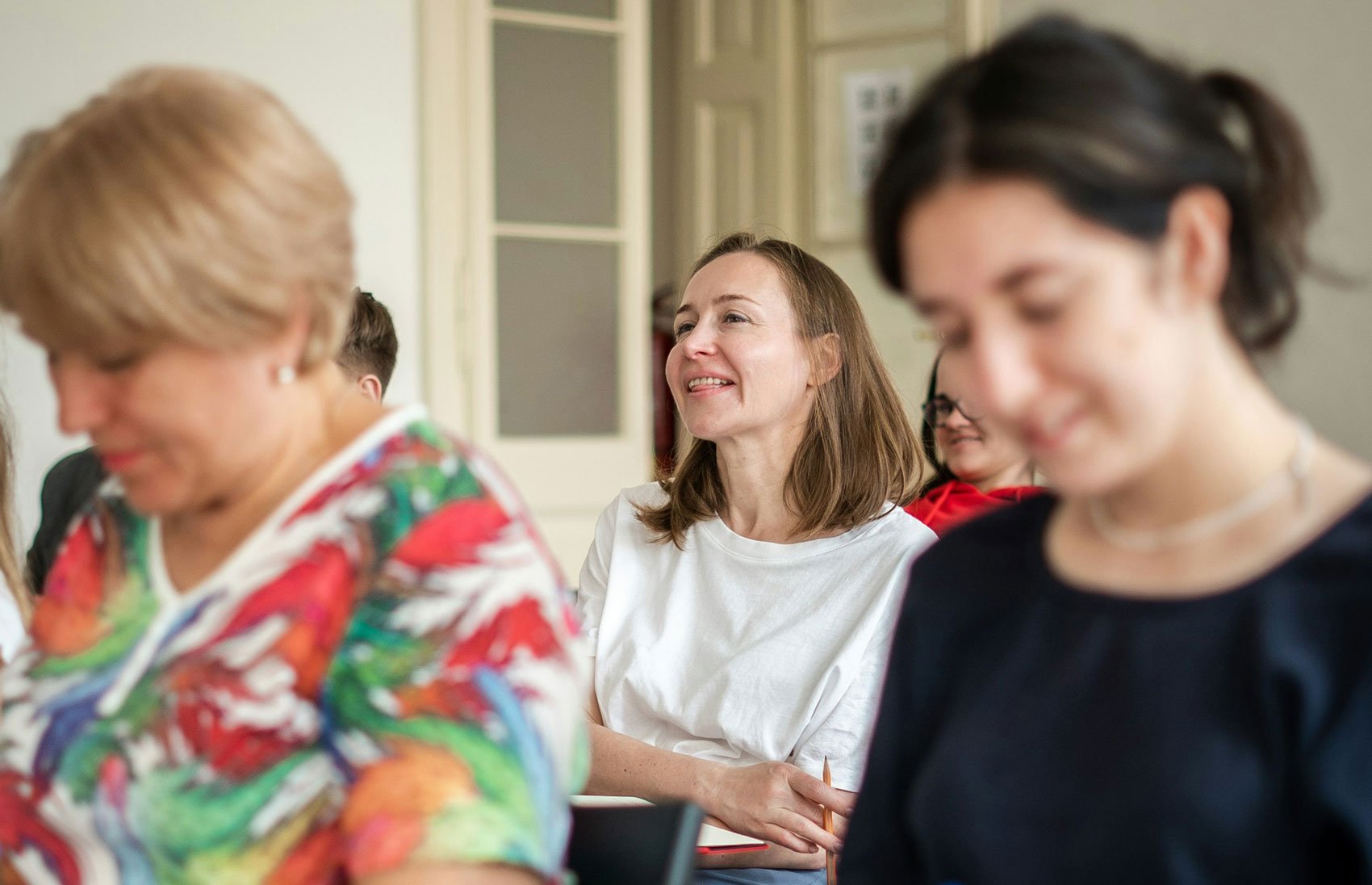
Somebody usually suggests a group first. A friend went to one after her dad died. The funeral home sent a flyer. Your doctor mentioned it. And you nodded and thought, maybe, and then didn't go, because sitting in a room of strangers and talking about the worst thing that ever happened to you sounds like a lot.
Or you're already in therapy and wondering whether a group would add something. Or you're in a group and wondering whether you need more.
I get this question a lot, and I'm in an unusual position to answer it. I see people individually for grief, and I also facilitate Mourning Coffee, a free grief group that meets the third Friday of every month at Terrace Park Funeral Home in Kansas City. So I'm not going to tell you one is better. I've watched both of them work. They do different jobs, and knowing which job you need done makes the choice easier.
What a grief group does that therapy can't
A good group gives you something I can't give you in my office: a room full of people who don't need it explained.
When you say you still set two coffee cups out some mornings, three people nod. Nobody flinches. Nobody changes the subject. Nobody says "at least." You find out that the strange things you've been doing and feeling are the normal things, because the person across the table is doing them too.
That is not a small thing. Grief is isolating, and a lot of the pain in the months after a death comes from feeling like the only person still in it while everyone else has moved on. A group breaks that. It's proof, in real people, that you're not alone and you're not crazy.
Groups are also low-commitment and free or close to it. Mourning Coffee is exactly what it sounds like: coffee, tea and conversation with other people who are grieving. You don't have to talk. You don't have to have lost someone recently, or someone in particular. You can come once and see. In the Kansas City area you'll find other groups through hospice bereavement programs, faith communities and HeartLight Center, which runs ours.
If your grief is heavy but uncomplicated, meaning you lost someone you loved and you're hurting the way a person hurts when that happens, a group may be all the support you need. Some of the people I've watched come through a group over a year didn't need anything else. They needed company, and a place to say the name.
What a group isn't built for
A group is a shared room. I say that with affection, because the sharing is the point. But it means your time is divided by however many people showed up, and on a morning when someone else is in worse shape than you, you'll give them the floor because that's who you are.
A group also stays, by design, at a certain depth. My job as a facilitator is to keep the room safe and warm and moving, and to make sure everyone who wants to speak gets to. It is not to work with what's underneath any one person's grief. There isn't time, and it wouldn't be fair to the others.
For a lot of people, what's underneath is where the trouble is.
What grief counseling does that a group can't
Individual grief counseling is one hour that belongs entirely to you, with someone trained to go where a group can't.
In 25 years of doing this, most of the people who come to me for grief aren't only grieving. The death cracked something else open. A complicated relationship with the person who died. Guilt about the last conversation, or the last year. A loss other people don't count as real, so you've been carrying it alone. An old trauma the grief woke up. A body that hasn't slept properly since the funeral.
That's the work of therapy. We slow down. We look at the specific shape of your loss, not loss in general. When the grief is tangled up with trauma, I use EMDR, which can take the charge out of the memories that keep ambushing you. When the grief is tangled up with a relationship that was hard while the person was alive, we sit with both the love and the anger, because you're allowed to have both.
Signs you need more than a group
You don't have to be in crisis to start therapy, and you don't have to wait for a group to fail you. But if any of these sound familiar, individual counseling belongs in the picture:
It's been a long time and it isn't getting lighter. Grief changes over months, and if yours feels frozen at the intensity of the first weeks, something is holding it in place.
You're avoiding. Certain rooms, songs, people, the cemetery, the photos. Avoidance is a sign the grief has a traumatic edge.
The death was sudden, violent or by suicide. These losses tend to carry images and questions that need more room than a circle can give.
The relationship was complicated. You're grieving someone who also hurt you, and a group's warmth doesn't always have space for that.
You've stopped functioning. Sleep, work, eating, showing up for your kids. When the basics slip for weeks, you need one-on-one support.
You can't say it out loud in a room. Some grief is too private for a group, at least at first.
Most people should consider both
The honest answer to "which one" is often "both, at different times, or at the same time."
The group gives you company. Therapy gives you depth. They feed each other. Something surfaces in a group that you can't say there, so you bring it to a session. Something loosens in a session, so you're able to speak in the group. People do a stretch of weekly therapy and taper to a group. People start in a group, realize there's more underneath and add therapy. Both directions are right.
If cost is part of the decision, the group is free, and I've written about what self-pay therapy costs and what you get for it. My rate is $150 per 50-minute session, and FSA and HSA funds cover it.
How to decide this week
Ask yourself one question: right now, do I need to feel less alone, or do I need to work on something?
If it's the first, come to a group. Mourning Coffee meets the third Friday of every month at 10am in the Lakeside Chapel at Terrace Park Funeral Home, 801 NW 108th Street in Kansas City. You can register through HeartLight Center. Come twice before you decide. The first time is always the hardest, and I'll be there.
If it's the second, or if the "signs" list felt a little too familiar, book a consultation. It's 15 minutes, it's free and you don't need to have your grief organized into sentences before you call. I work online with adults across Missouri and Kansas, in the evenings and around real schedules.
You don't have to choose the harder road to prove you're grieving properly. You get to choose the one that helps, and you're allowed to choose more than one.